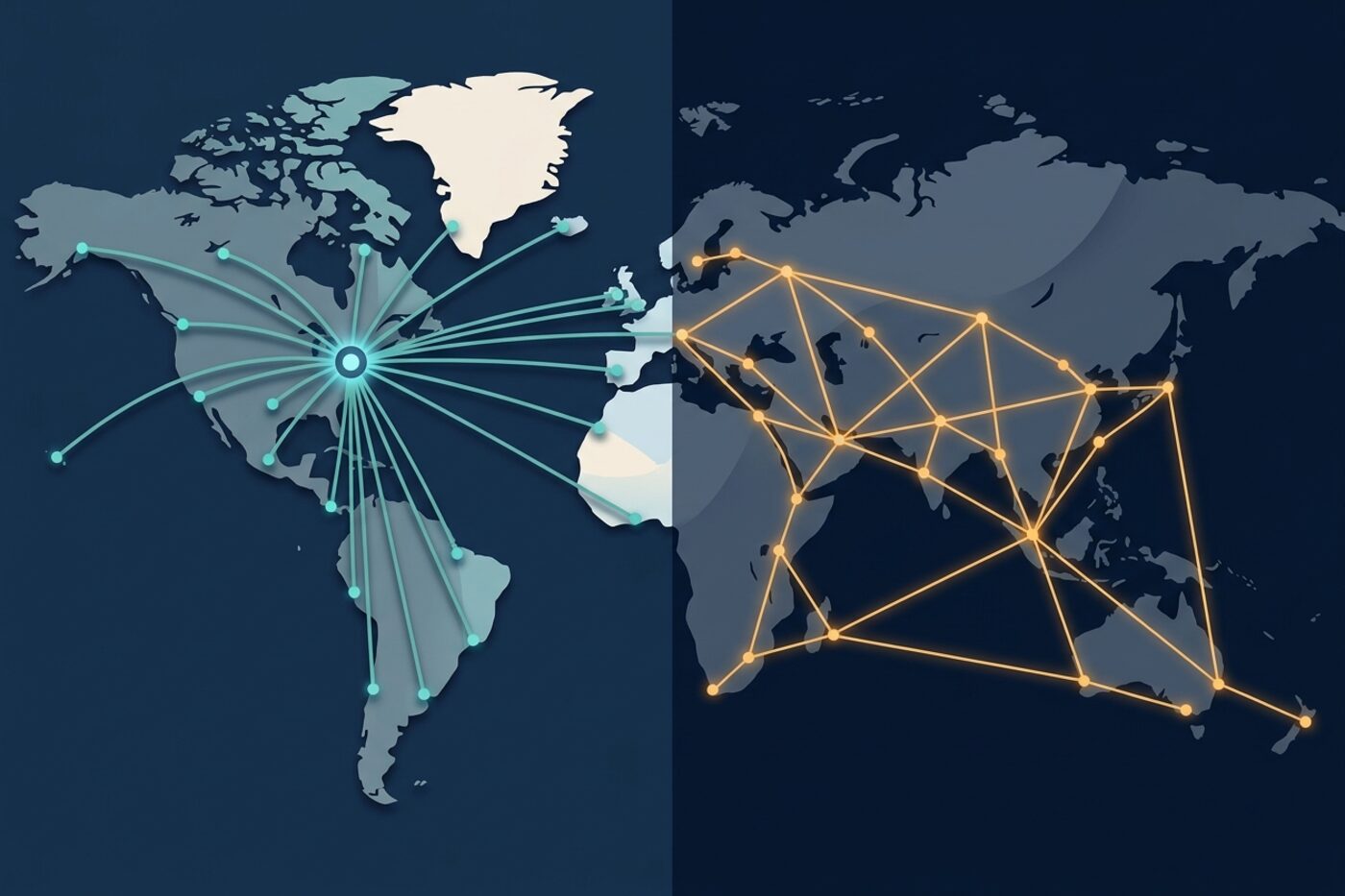
Hub-and-Spoke vs Point-to-Point Route Networks

Every new virtual airline eventually has the same argument with itself: should the route map look like a real legacy carrier’s, with everything funneling through one or two hubs, or should it be a loose web of direct routes between whatever airports the founders like flying? I’ve built network maps both ways over the years, and both can work well – they just fail differently when you get the choice wrong for your specific VA.

What hub-and-spoke actually gives you

A hub-and-spoke network concentrates flights through a small number of central airports, with spoke routes feeding traffic in and connecting flights carrying it back out – the same logic Delta uses at Atlanta or Lufthansa uses at Frankfurt. For a virtual airline, the real benefit isn’t passenger connections, since nobody’s actually connecting between your flights. It’s that concentrating activity at one or two airports builds a real community there. Pilots based near or interested in your hub fly it repeatedly, get to know its layout, its typical arrival flows, and its regulars, and staff can concentrate real-world-style operational detail – accurate SIDs and STARs, gate assignments, ground handling procedures – on a manageable handful of airports instead of thinning that effort across fifty.

It also makes growth predictable. Adding a new spoke route is a small, contained decision: pick a destination, connect it to the existing hub, done. New pilots have an obvious entry point too – “learn our hub, then branch out” is a much easier onboarding story than “here are ninety unrelated city pairs, pick some.”

The tradeoff is that a hub-and-spoke network can feel monotonous if your hub isn’t interesting to fly repeatedly, and it puts a lot of weight on picking that hub well. Choose an airport with genuinely varied approaches, a mix of short and long spoke distances, and reasonable ATC coverage on VATSIM or IVAO, and the repetition stays engaging. Choose a flat, procedurally simple airport and repetition becomes the thing that drives pilots away.

What point-to-point actually gives you

A point-to-point network – closer to how Southwest or easyJet actually operate in the real world – links city pairs directly without funneling everything through a central node. For a VA, the appeal is variety: pilots aren’t tied to one home base, the route map can follow whatever real-world city pairs the founders and members find interesting, and it’s easier to add a route that has nothing geographically to do with your existing network.

This structure suits a VA built around a specific aircraft type or a themed identity – a 737 or A320 narrow-body operation modeling a specific real airline’s actual route list, for instance – more naturally than hub-and-spoke does, since real low-cost and regional carriers are usually point-to-point themselves. It also lowers the barrier for members scattered across different time zones and regions to each fly routes local to them, rather than everyone needing to touch the same hub airport.

The tradeoff is coordination. Without a shared hub, there’s less natural overlap between pilots’ schedules and less of the organic community-building that comes from repeatedly seeing the same people at the same airport. Group events need more deliberate planning since there’s no default gathering point, and new pilots don’t have as obvious a starting question as “which spoke do I want to try first.”

Fleet planning follows the network, not the other way around

The route model you pick also quietly decides your fleet needs, which is easy to overlook when you’re first sketching a route map. A hub-and-spoke network with short regional spokes and a handful of long-haul routes out of the hub wants a mixed fleet – something like a regional jet or turboprop for the short legs and a wide-body or long-range narrow-body for the marquee routes. A point-to-point network built around one aircraft type stays simpler to manage because every route uses the same performance numbers, the same checklist flow, and the same type rating requirement for pilots, but it caps how far your route map can stretch before the aircraft’s range runs out.

This is worth deciding early rather than backing into it. A VA that bolts a single long-haul route onto an otherwise short-haul point-to-point network, purely on member request, often finds it sits underflown – it doesn’t fit the identity pilots signed up for, and it needs an aircraft type most of the roster isn’t rated on.

A reasonable middle ground

Plenty of successful VAs land somewhere between the two: a primary hub that anchors community and staff attention, plus a secondary layer of point-to-point routes that don’t touch the hub at all, aimed at pilots who want variety or who are geographically distant from it. This mirrors how real airlines with a dominant hub still operate some direct regional or leisure routes that skip it entirely. It costs more in route-planning effort than picking one pure model, but it lets you capture the community benefit of a hub without forcing every member into the same routing.

Deciding for your own VA

The honest deciding question isn’t which model is objectively better – it’s genuinely situational. If your founding group is concentrated around one region or one airport everyone enjoys flying, hub-and-spoke will build community faster. If your identity is built around a specific real airline’s actual operation or a specific aircraft type flown globally, point-to-point will feel more authentic and keep your route map interesting longer. Look at how Flightradar24 visualizes a real carrier whose model you admire, trace out how their network actually distributes traffic, and you’ll usually find the answer to which structure fits the identity you’re trying to build before you’ve written a single route into your database.
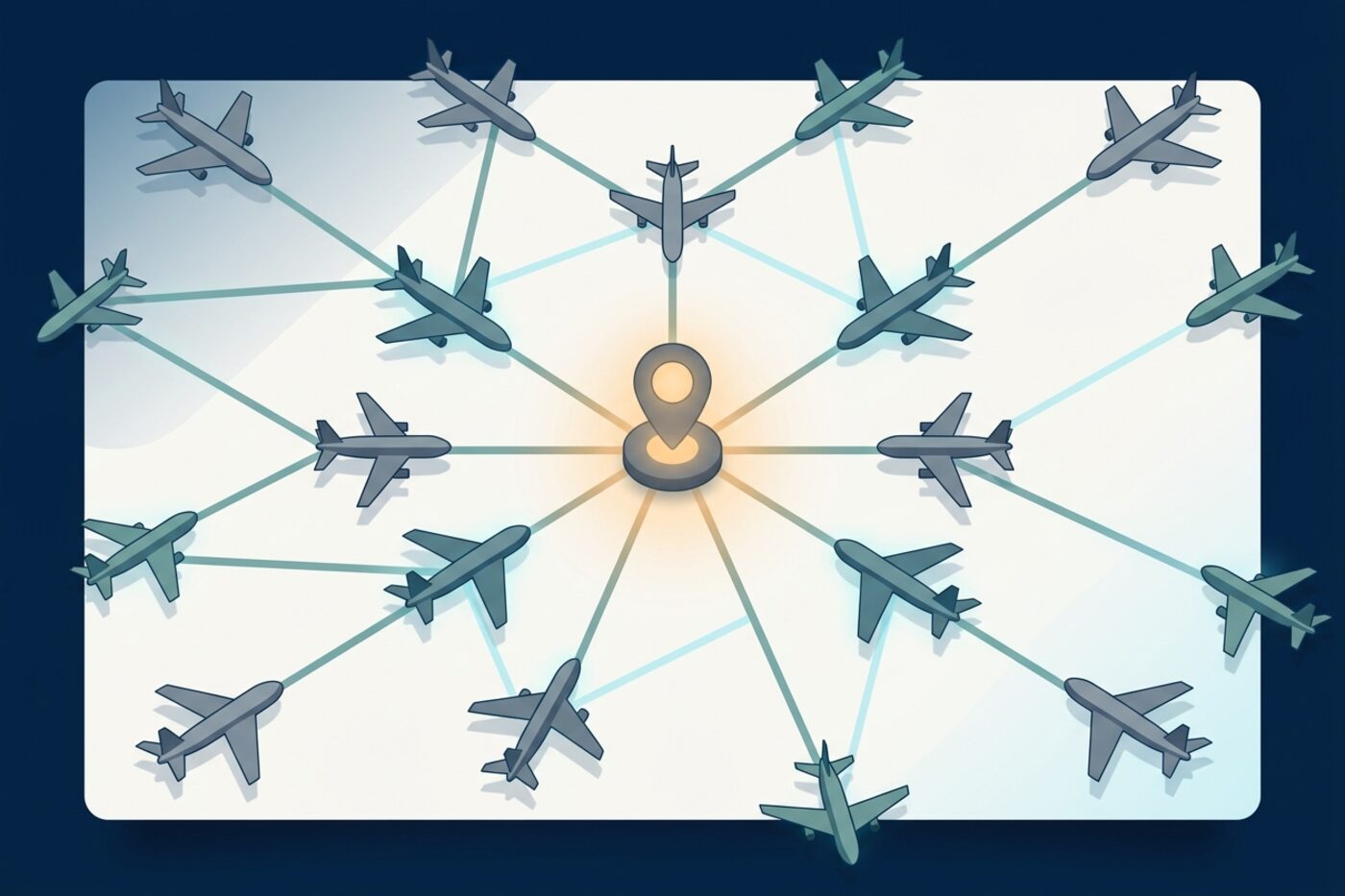

Keeping Pilots Active in Your Virtual Airline

Recruiting pilots into a virtual airline is the easy part. Anyone can put together a nice-looking application form and a Discord invite link, and a decent number of people will sign up out of curiosity. The hard part, the part that actually determines whether your VA survives past its first year, is keeping those pilots flying six months later when the initial novelty has worn off. I’ve watched several VAs bleed out slowly this way – healthy sign-up numbers, quiet flight logs, and nobody quite noticing until the roster is mostly ghosts.

Understand why pilots actually go quiet

It’s rarely one dramatic reason. It’s usually some mix of: the route network stopped feeling fresh, nobody from staff ever acknowledged them personally, real life got busy and there was no easy way to signal that without losing progress, or the community itself never gave them a reason to log in beyond flying a sector alone. Notice that hardware, aircraft add-ons, and route count aren’t really on that list. Retention is mostly a community and communication problem, not a content problem.

Give people a reason to fly together, not just alongside each other

A VA where everyone flies solo routes on their own schedule technically functions, but it doesn’t build attachment. Scheduled group flights – a monthly fly-out to a chosen destination, a fully coordinated multi-leg event with real handoffs between pilots – turn flying from a solitary activity into a shared one. These don’t need to be elaborate. A single announced departure time, a shared frequency on VATSIM or IVAO, and a Discord voice channel for pilots to chat before and after the flight is often enough to turn a quiet Tuesday into the highlight of someone’s week.

Seasonal or themed events help too – flying routes that mirror real airline seasonal changes, running a “fly the fleet” challenge where pilots log a sector on every aircraft type in the operation, or timing an event around a real-world air show or aviation anniversary. The specific theme matters less than the fact that it gives people something to look forward to on the calendar.

Make communication feel personal, not automated

ACARS systems automatically log hours, update ranks, and can even send templated emails, and that automation is genuinely useful infrastructure. But it shouldn’t be the only voice a pilot hears from your VA. A staff member actually commenting on someone’s flight in Discord, welcoming a new member by name instead of pointing them at a rules channel, or personally reaching out to someone who’s gone quiet for a few weeks – these small, human touches are disproportionately effective at making a pilot feel like part of something rather than a row in a database.

The reach-out matters even more than the welcome. A short, low-pressure message – “haven’t seen you in the logs for a few weeks, everything good?” – costs a staff member two minutes and regularly brings pilots back who would otherwise have quietly lapsed without ever telling anyone why.

Let inactivity have a soft landing

Punitive inactivity policies – hard removal after thirty days with no warning – lose pilots permanently who would have come back with a bit of patience. A tiered approach works better: a friendly check-in message, then a Leave of Absence option that pilots can self-serve without staff involvement, and only after genuine prolonged silence does an account move to inactive status. Preserve their hours and history when that happens. Nothing kills the motivation to come back faster than returning to find your entire flight log wiped.

Give long-tenured pilots something beyond just flying more

Pilots who’ve been active for a year or more sometimes plateau – they’ve earned most of the ranks, flown most of the interesting routes, and the thing that made it exciting a year ago has become routine. This is the point to offer them a path sideways rather than just up: mentoring new pilots, helping run an event, contributing route research, or joining a small ops team. Not everyone wants this, and it should never be pushed on someone who just wants to fly, but for the pilots who are looking for more investment, having somewhere to put that energy keeps them engaged long after the rank ladder stops being the motivator.

Measure it, don’t just feel it

Most ACARS and VA management systems can report monthly active pilot counts, not just total registered members. Watch that number over time rather than the total roster size, which only ever grows and tells you nothing about health. A VA with 400 registered pilots and 40 flying monthly has a real retention problem worth addressing directly, even if the total membership number looks impressive on a forum signature. Community hubs like the forums at VATSIM and IVAO are also worth watching – VAs that stay visible and active in the wider network community tend to pull back lapsed members simply by staying in view.

Managing Pilot Ranks and Careers in a Virtual Airline

The rank system is one of the most powerful tools a virtual airline has – and one of the most common things VAs get wrong. Done well, ranks give pilots a reason to keep flying, a sense of professional progression, and a community structure where experience is visible and respected. Done poorly, they create frustration, gatekeeping, and an atmosphere where new pilots feel like second-class members before they’ve had a chance to prove themselves. I’ve managed pilot rosters for a mid-size VA and made most of the mistakes worth making. This is what I learned.

The basic rank structure

Most virtual airlines model their ranks on real-world commercial aviation: Student, First Officer, Senior First Officer, Captain, Senior Captain, and sometimes a Check Airman or Chief Pilot role at the top. The specific titles are flexible – some VAs use purely military ranks, others use cargo operator terminology, others invent their own scheme that fits their VA’s identity.

What matters more than the names is the progression logic: what does it take to move from one rank to the next, and does that requirement feel achievable without feeling trivial? A threshold that a dedicated pilot hits after two or three months of active flying is roughly right. Thresholds that take a year to hit cause dropout. Thresholds that take a week feel meaningless.

Flight hours as the primary metric

Total logged flight hours are the standard currency for rank progression, and for good reason – they’re objective, accumulate naturally from flying, and can be tracked automatically by ACARS. The question is where to set the thresholds.

A common structure that tends to work:

  • First Officer – from 0 hours (entry rank on joining)
  • Senior First Officer – 50 hours
  • Captain – 150 hours
  • Senior Captain – 400 hours
  • Check Airman / Staff ranks – 750 hours or nomination-based

These numbers scale with your VA’s average activity level. A very active VA where pilots average 20 hours a month might push these thresholds up. A casual VA with mostly occasional flyers might lower them. The goal is that an active member reaches Captain within six to nine months – long enough that it feels earned, short enough that it doesn’t feel out of reach.

Type ratings and fleet qualifications

Hours alone don’t capture everything meaningful about a pilot’s experience. Adding type ratings – qualifications for specific aircraft types – adds a second dimension that more closely mirrors real aviation and gives pilots additional goals beyond just accumulating hours.

A type rating system typically requires a minimum number of hours on a specific aircraft (say, 25 hours on the A320 family) before the pilot is rated to fly that type on VA routes. Some VAs add a check flight requirement: a staff pilot or check airman flies alongside the applicant (on VATSIM, in voice, watching the shared flight), evaluates a standard profile, and signs off the rating.

The check flight requirement is optional and labor-intensive – it needs willing check airmen and available schedule slots – but the VAs that do it well report that it creates genuine pride among rated pilots and a sense of community investment that purely automated hour-counting doesn’t produce.

Activity requirements and leave of absence

Pilot rosters go stale without maintenance. Members join, fly for a few months, and then disappear – life happens. If you don’t have an activity requirement, your roster eventually becomes mostly inactive accounts and your active community looks smaller than it is by any external measure.

A minimum flight per month or per quarter requirement, communicated clearly at signup, is the standard solution. Members who fall below the threshold get an email warning, and if they don’t respond or fly within a grace period, their account moves to inactive status. The data stays – their hours and history are preserved – but they drop off the active roster.

Equally important: have a Leave of Absence process. Real life interrupts everyone. A pilot who’s moving house, dealing with a health issue, or just swamped at work should be able to put their account on hold for sixty or ninety days without penalty. VAs that enforce activity requirements without a LoA system lose pilots who would otherwise come back. The LoA just needs to be an email to staff or a button in the pilot portal – it doesn’t need to be complicated.

Transparency and communication around promotions

One mistake I see repeatedly: VAs that don’t tell pilots when they’ve been promoted. The ACARS system tracks hours and the database updates, but the pilot finds out by noticing their rank badge changed on the forum signature. This is a missed opportunity.

A promotion email – even a short automated one – acknowledges the milestone. A public mention in a monthly newsletter (“congratulations to the following pilots on their promotions this month”) costs almost nothing and creates a meaningful positive moment for the recipient. These small gestures are what make people feel like they’re part of an actual organization rather than just logging numbers into a database.

Senior staff and the internal career track

Above Captain, most VAs need volunteers to fill operational roles: route planners, check airmen, event organizers, community moderators. This is where the career structure branches from pure flying into operations involvement.

The key principle here is that staff roles should be opt-in and clearly bounded. A pilot who reaches Senior Captain should feel proud of that – it should not automatically come with a workload expectation they didn’t sign up for. Invite high-hour, active pilots to consider staff roles, explain what the role actually involves, and let them choose. The ones who want to contribute will; the ones who want to just fly should be able to do exactly that without being made to feel like they’re not pulling their weight.

Building a Realistic Flight Schedule for Your Virtual Airline

A virtual airline without a good schedule is like a real airline without a timetable – nobody knows what to fly, routes overlap in weird ways, and the whole operation feels improvised. I’ve seen small VAs die specifically because their route network was either a random dump of every ICAO pair imaginable or a skeleton too thin to give pilots meaningful choices. Building a schedule that actually works takes more thought than it sounds.

Define your identity first

Before you open a route planner, decide what kind of airline you are. That question shapes everything else. Are you a full-service carrier covering long-haul routes between major hubs? A low-cost operator with dense short-haul networks in a specific region? A cargo airline running overnight freighter operations? A regional feeder flying turboprops into secondary airports?

The identity determines your fleet type, which determines what your pilots need to fly, which determines the routes that make sense. A virtual carrier trying to operate everything from Cessna 208 Caravans to A380s ends up with an incoherent schedule and a fleet management nightmare. Specialization makes the whole thing more believable and easier to build.

Use real-world data as a foundation

Real airlines spend enormous resources optimizing their schedules – there’s no reason not to borrow their work. Sources like FlightAware and Flightradar24 show you exactly which routes exist in the real world, what aircraft types operate them, and roughly how frequently. This is invaluable for a VA that mirrors a real carrier – you pull the actual schedule and replicate it in your system.

For fictional VAs, the same data tells you what’s realistic. If no real airline operates non-stop between two airports, there’s probably a reason – distance, demand, or slot constraints. You can invent a route, but it should pass a basic plausibility check: does the aircraft have the range? Is there enough simmer interest in both airports to justify it?

Hub-and-spoke versus point-to-point

Most major virtual airlines use a hub-and-spoke structure because it mirrors how large real carriers work and because it keeps the route database manageable. You pick one or two primary hub airports – ideally well-represented in add-on scenery – and build connecting spokes outward. Pilots flying long-haul start and end at the hub; shorter sectors connect secondary cities.

Point-to-point networks work well for low-cost or regional models. Every route stands on its own, there’s no mandatory hub transit, and pilots can pick up any sector they want. The tradeoff is that the route database can grow chaotic if you’re not careful about which city pairs you include.

A hybrid approach is common for larger VAs: a hub-and-spoke backbone with some direct point-to-point routes for popular city pairs that don’t route naturally through the hubs. This is exactly what most real airlines do.

Balancing route length and pilot availability

Flight simulation is a hobby. Most pilots have between one and three hours at a time to fly. This means your schedule needs routes in every duration bracket – short 45-minute hops, medium two-hour sectors, and longer hauls that pilots can attempt when time allows.

If your schedule is weighted too heavily toward 12-hour ultra-long-haul flights, you’ll see activity spikes on weekends and dead periods during weekdays. If it’s all 45-minute short hauls, you miss the pilots who specifically want to set up an intercontinental flight and practice the oceanic procedures that come with it. Aim for roughly a third of routes in each duration category.

Rotating schedules and seasonal events

A static schedule that never changes gets stale. Real airlines add and drop routes seasonally – summer leisure routes to beach destinations, winter ski resort connections. Your VA can do the same, and it gives staff a reason to make announcements and gives pilots a reason to check back in.

Seasonal events don’t need to be elaborate. A “summer Pacific push” that opens five new routes to Pacific island airports for three months, or a winter cargo charter series that adds overnight freight runs to underflown destinations, is enough to create variety. The key is that it has a start date, an end date, and a brief announcement that explains what’s happening.

Keeping the database clean

Route bloat is real. VAs that add routes for years without ever pruning them end up with databases full of sectors that nobody has flown in eighteen months. This makes the schedule look busy but actually fragments pilot activity across hundreds of thin routes instead of concentrating it on the ones people want to fly.

A route review every six months – looking at which sectors have had zero PIREPs in the last quarter – keeps things tidy. Prune the dead routes, consolidate underperforming hubs, and use the review as an opportunity to announce what’s changing. Pilots appreciate transparency about why routes come and go.

The schedule as a living document

The best virtual airline schedules aren’t built once and left. They’re revised based on what pilots actually fly, what add-on scenery gets released (a new airport package for a city is a natural trigger for routes into that airport), and what the community asks for. A good operations director treats the schedule the way a real network planning team does – as an ongoing optimization problem with real feedback loops. The pilots are the demand signal. Pay attention to what they’re flying and what they’re ignoring.

What Is a Virtual Airline and How It Works

The first time someone explained virtual airlines to me, I thought they were describing a video game clan with extra steps. Then I joined one. Within a week I was filing proper flight plans, logging hours in a shared database, and getting feedback from a “chief pilot” who had more real-world ATPL theory knowledge than most people I’ve met. Virtual airlines are a serious corner of the flight simulation hobby – and they’re a lot more structured than they look from the outside.

The basic idea

A virtual airline (VA) is an organization run entirely by flight simulation enthusiasts that mirrors the structure of a real-world carrier. It has routes, a fleet, ranks, a crew roster, and usually a website where pilots track their flights. None of this involves real aircraft or real money – it’s a community built around simulator software like Microsoft Flight Simulator or X-Plane, held together by shared enthusiasm and purpose-built management platforms.

Some VAs model real airlines exactly – same routes, same liveries, same aircraft types. Others invent fictional carriers with their own branding. A few specialize in a single niche: cargo operations, bush flying in remote regions, historical jets from the 1960s. The format is flexible enough to support all of it.

How pilots actually participate

Joining a VA typically means registering on their website, reading a basic operations manual, and completing an orientation flight. After that, the loop is straightforward:

  • Browse the available route schedule or bid for specific flights
  • Load the assigned aircraft and departure airport in the simulator
  • Fly the route, either offline or on an online network like VATSIM
  • Submit a PIREP (pilot report) with flight time, fuel used, and any notes
  • Accumulate hours toward the next rank

That PIREP step is where the management layer comes in. Most modern VAs use software like phpVMS, SmartCARS, or a custom-built platform to handle automated ACARS tracking – a small client runs alongside the simulator and logs your position, altitude, speed, and fuel in real time. When you land and close the flight, it files the report automatically. No manual data entry, no honor system.

The rank and career structure

Almost every VA uses a rank system tied to total logged flight hours. A new pilot might start as a First Officer on narrow-body short-haul routes. Hit a hundred hours and you qualify for wider aircraft. Hit five hundred and you’re a Captain. Some airlines add type ratings – you have to pass a check flight in a specific aircraft before you’re authorized to carry it on your logbook.

It sounds bureaucratic, but the structure gives the hobby a sense of progression that purely free-form simulation lacks. There’s a reason to fly routes you might otherwise skip. There’s also a social dimension: senior pilots often mentor newer members, and the operations team notices if someone is flying consistently or disappearing for months at a time.

The technology underneath

The backend of a well-run VA is more complex than it looks from the pilot’s side. The website needs to handle user accounts, route databases, fleet assignments, PIREP validation (checking that submitted data matches the actual route), and a live flight map if the VA flies on online networks. Many use phpVMS as the foundation and build custom modules on top of it.

ACARS clients – the in-simulator trackers – vary by platform. Some VAs write their own. Others use established tools that integrate with both MSFS and X-Plane. The tracker checks things like whether the pilot used a pause during cruise, whether landing was within acceptable parameters, and whether the flight deviated significantly from the filed route. These checks discourage warping across the map or submitting fake flights.

What makes a virtual airline worth joining

Not all VAs are created equal. The ones worth your time usually have a few things in common: an active staff that responds to forum posts and support requests, a route network that actually reflects what you want to fly, regular fleet updates when new add-ons release, and some form of community events – group flights, competitions, or seasonal challenges.

The weaker ones have outdated route databases, broken ACARS clients, and a forum where the last post is two years old. You can usually tell within the first ten minutes of browsing the site. Look at the events calendar, check when the last announcement was posted, and see whether the pilot roster shows recent activity.

Finding the right fit

There are directories like the Virtual Airline Network and forums on sites like AVSIM where VAs list themselves and pilots post reviews. Searching for a specific airline name followed by “virtual” usually finds the VA that models it, if one exists. Discord has become the primary real-time channel for most active VAs – if they don’t have a Discord server or at least a forum with recent posts, that’s a yellow flag.

The best advice I can give is to try two or three before committing. Most VAs are free to join and don’t lock you into anything. Fly a few routes, see how the community interacts, and pay attention to whether staff takes the operation seriously. The right VA turns what would otherwise be a solo hobby into something that feels genuinely collaborative.