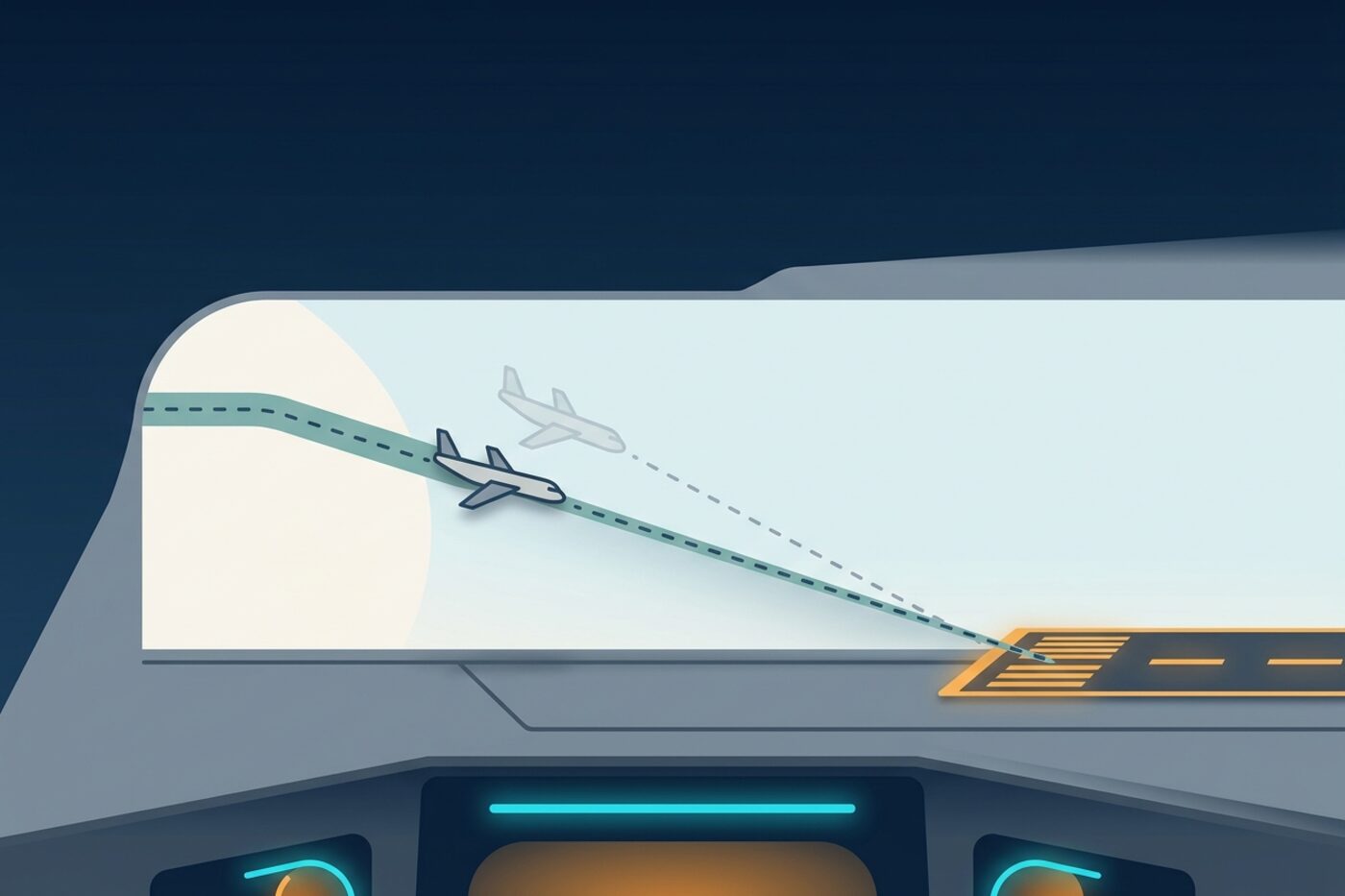
Cruise is where flight simming relaxes you, and the approach is where it tests you. Every recurring mistake I still catch myself making, and every one I’ve watched other pilots make on VATSIM, traces back to a handful of root causes that show up again and again regardless of aircraft type. None of these are exotic – they’re the same handful of habits that separate a landing you’re proud of from one you’re quietly relieved survived.
Getting behind the descent instead of ahead of it
The single most common failure mode is realizing too late that you’re high and fast for where you need to be. It usually starts small – a few extra minutes at cruise altitude waiting for a clearance, a shallow descent rate that felt comfortable at the time – and compounds until you’re crossing a fix well above the published altitude with speed still to lose. The fix isn’t a clever last-minute maneuver, it’s catching the problem earlier: run rough descent math well before top of descent, using distance-to-go times three plus a buffer for deceleration, and treat any early warning sign as a reason to descend more aggressively now rather than hope it resolves itself.
If you do end up high and fast anyway, know your aircraft’s tools for losing energy – speed brakes, an earlier gear extension, a wider pattern if ATC allows it – and use them decisively rather than accepting an unstabilized approach because going around feels like an admission of failure. It isn’t. A go-around is a normal, correct outcome, not a mistake.
Chasing the glideslope instead of flying a stable approach
New instrument pilots often treat the localizer and glideslope needles like a video game target to chase, making constant small corrections that create an oscillating approach – correcting above, overcorrecting below, back and forth all the way to minimums. Smooth instrument flying is about small, early corrections and then holding them, not continuous chasing. If you find yourself making a correction every few seconds, the underlying problem is usually that the aircraft wasn’t properly trimmed and configured earlier in the approach, not that you need faster reflexes on the yoke.
Misjudging the flare
The flare is where a lot of otherwise solid approaches fall apart, and the most common error is starting it too high, which leads to floating, ballooning, or a hard drop once the float runs out of energy. The flare height varies by aircraft, but as a general habit, pick a consistent visual reference – a specific point relative to the runway threshold or your height indication – and start the flare there every time rather than guessing fresh on each landing. Consistency in when you start the flare does more for landing quality than fine motor control during it.
The opposite error – flaring too late or not at all – produces a firm arrival that’s jarring but usually structurally fine in the sim, whereas floating and running out of runway is the error that actually causes go-arounds and runway excursions. If you’re between the two failure modes, err toward flaring a touch early rather than late.
Ignoring or mishandling crosswind
Crosswind landings expose whichever fundamental is weakest in your technique, because they demand rudder coordination that a straight-in calm-wind landing never forces you to develop. The crab-then-kick or wing-low technique both work; the actual mistake is usually failing to check the wind at all during approach briefing and being surprised by drift on short final instead of having already decided which technique you’ll use and roughly how much correction to expect.
It’s also worth checking the crosswind component against your aircraft’s demonstrated limit before you commit to the approach rather than discovering mid-flare that the correction required is more than the airplane, or you, can comfortably handle. If the number is close to the limit and a better runway is available, requesting it from ATC is a normal, sensible call – not a sign you’ve failed the flight.
Forgetting the airplane doesn’t stop being an airplane at touchdown
Pilots who fly a clean approach and a solid flare sometimes go slack the moment the wheels touch, forgetting that directional control, spoiler deployment, and reverse thrust or braking are still active flying tasks. A landing that looked great through the flare can still end with a runway excursion from relaxed rudder input during rollout, especially in a crosswind. Fly the airplane all the way to the taxiway, not just to touchdown.
Practicing the fix, not just the symptom
Most of these errors share a root cause: reacting late instead of planning early. The FAA Airplane Flying Handbook covers stabilized approach criteria and flare technique in detail if you want the reference-grade version of this, and it applies just as directly to sim flying as to the real aircraft it was written for. Flying a dedicated pattern session – repeated approaches to the same runway with no other objective – is genuinely one of the more useful, if unglamorous, ways to spend an hour improving specifically this part of your flying rather than adding it as an afterthought at the end of a long-haul flight.